Consulting
You have a goal, a problem or an idea.Let's turn it into a project that delivers.
I work with companies and organisations to define, design and deliver strategic and technology-driven projects, bringing together business, technology, processes and the right expertise.
You do not need to come with a solution already mapped out. We can start from an idea, a concrete need, or something that already exists but needs a new direction.
01 / Consulting
You do not need to know how to build it yet
Your initial request is the starting point. The real destination is what the project actually needs.
Projects often start with a simple thought: “I know what I want to achieve, but I am not sure of the best way to get there.”
That is a perfectly valid starting point.
The first step is to understand the goal, the business context in which the solution has to work, what is already in place and which constraints matter. From there, we can define what is actually worth doing, what should come first, which expertise is needed and what level of investment is justified.
The solution you initially had in mind may be the right one. Or the analysis may point us in a different direction.
02 / Consulting
When I can help
I am most useful when the challenge cannot be solved by simply executing a single task. It requires someone to understand the wider picture and build a coherent path forward.
- 01
You have an idea that needs to become a real project
We can start at the earliest stage: market analysis, feasibility, validation, business model, priorities and the path to implementation.
- 02
You have a complex project that needs leadership
Several technologies, suppliers, skills or decisions are involved and you need someone to keep the overall direction clear.
- 03
You know where you want to go, but not how to get there
The goal is clear, while the architecture, tools, investment and operating model still need to be defined.
- 04
An existing project has become complicated
Systems, suppliers, processes or decisions have accumulated and the project needs a coherent direction again.
- 05
You want to introduce innovation into the business
AI, automation, software, new processes or new ways of working need to create measurable value rather than simply add more technology.
- 06
You want to improve what is already there
Starting again from scratch is not always the best answer. Often the strongest result comes from integrating, simplifying and improving the systems the company already has.
03 / Consulting
I do not look at the project in isolation. I look at the system it needs to work within.
The agreed scope defines what has to be delivered. It does not limit the way I look at the problem.
A project does not operate in a vacuum. It has to work within a business made of people, processes, customers, tools, suppliers, economic constraints and goals.
That is why I do not necessarily stop at the technical boundaries of the original request. If I identify an organisational, commercial, technological or operational issue that could affect the outcome, I raise it and assess with the client how it should be handled.
04 / Consulting
A structured method. A solution built around the business.
I standardise the method, not the solution.
I do not start from packages, products or technologies that need to be sold.
Two companies may appear to ask for the same thing and still need completely different solutions. Goals, people, processes, existing systems, budgets, timelines, internal capabilities and future plans all vary.
My method therefore follows clear principles and stages, while the solution is designed around the actual context every time.
05 / Consulting
Business before technology
I do not start from what we can build. I start from what is worth building.
- 01
Before building something, there must be a business reason to build it.
Technology is not the goal. It is a tool.
An investment should create a concrete advantage: generate opportunities, improve a process, reduce time and cost, increase efficiency, strengthen reliability or enable the company to do something it could not do before.
That means considering priorities, economic sustainability, required investment and expected value. Not everything that can be built should be built.
If the analysis shows that the right decision is to reduce the scope, validate the idea on a smaller scale, change direction or not build it at all, that can still be a successful outcome.
06 / Consulting
From idea to delivery
I can work on one specific stage or stay with the project throughout its full journey.
Projects do not all start at the same stage, and they do not all need to go through every step.
I can join when there is only an idea to validate, when a business model and investment priorities need to be defined, or when something already exists and needs to be completed, corrected or evolved.
Early work may involve market analysis, feasibility, business model, priorities and investment. Later stages may include solution architecture, technology selection, work planning, specialist sourcing, implementation and coordination. Then come measurement, optimisation and further evolution.
- 01Idea
- 02Analysis
- 03Validation
- 04Strategy
- 05Design
- 06Delivery
- 07Measurement
- 08Evolution
07 / Consulting
The right expertise around the project
The goal is not to do everything myself. It is to make sure the project has the expertise it needs and that everyone is moving in the same direction.
- 01
One person does not need to know everything. What matters is knowing what is needed and who should do it.
I remain responsible for the professional relationship and the overall project view.
When specialist expertise is required, I can involve professionals and suppliers I already work with or collaborate with the people already supporting the company. If an existing supplier is good, there is no reason to replace them. If a capability is missing, I can help identify and bring it into the project.
Depending on the context, I may coordinate the work directly or retain project oversight while some commercial relationships remain directly between the client and the supplier.
08 / Consulting
Autonomy, accountability and project leadership
- 01
Once a project is entrusted to me, it needs to move forward.
Before starting, we define goals, scope, responsibilities, operating model and investment.
Within that framework, I work with the autonomy required to make operational decisions and move the work forward without turning the client into the day-to-day manager of my activity.
Strategic decisions and meaningful changes are shared. Day-to-day execution, however, needs clear ownership.
If new risks or opportunities emerge beyond the original scope, I raise them and we decide together how they should be handled.
09 / Consulting
HOW I WORK WITH THE ORGANIZATION
A project works better when analysis, decisions and execution remain connected.
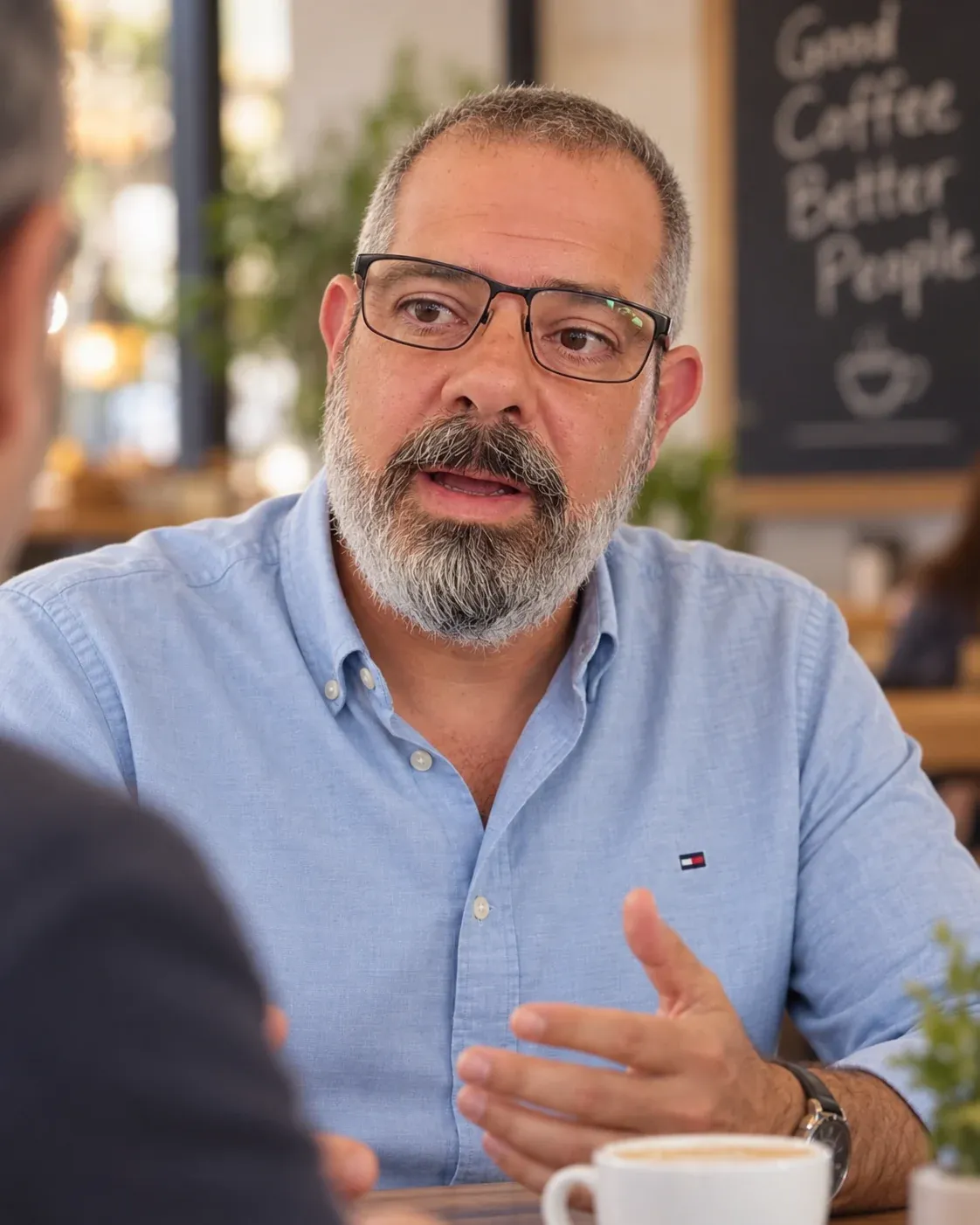
The starting point is what the organization wants to achieve, the problem it sees and the context in which that problem exists. I analyse what emerges, explain my reading of the situation and propose the path I believe offers the strongest route to the objective.
The proposal is not a formality. We discuss it together: new information, constraints, observations and objections help test and refine the path before turning it into work.
- 01
Understand before proposing
Before discussing tools or solutions, I look at people, processes, systems, dependencies and constraints. The stated problem and the real problem are not always the same.
- 02
Agree the path before starting
The analysis leads to a proposed way forward: priorities, sequence, responsibilities and criteria for evaluating the outcome. I explain it, we discuss it and, when necessary, refine it together before execution begins.
- 03
Stay in contact while the work moves forward
Once the project starts, the conversation continues. I work with the people who actually know the processes and systems, test what emerges during execution and bring new information back into the project whenever it can change priorities or decisions.
TWO LEVELS, ONE PROJECT
Operations and leadership need to keep talking.
Day-to-day work may take place with technical teams, managers, employees and suppliers. In complex projects, however, I consider it important to maintain periodic direct dialogue with ownership, leadership or the board as well.
Information moves through different levels of an organization and can inevitably lose context along the way. Keeping that connection open makes it possible to discuss progress, critical issues, results and decisions directly, without separating what is being done from why it is being done.
A project can be operational without becoming merely operational.
10 / Consulting
Before we start, we define what “working” means
A project is not finished simply because it has been delivered. It has to produce the result it was built for.
A project should not be considered successful simply because it was completed.
Before starting, we define the objectives and, whenever possible, the indicators that will tell us whether we are achieving them.
The result may be financial, commercial, organisational or technical: more business opportunities, higher conversion, less manual work, fewer errors, shorter lead times, lower costs, greater reliability, better use of data, validation of a business model or achievement of a specific milestone.
During and after delivery, measurement helps us understand what is working, what needs to change and where further improvement is possible.
11 / Consulting
The work can continue after delivery
I do not necessarily wait for a problem to appear. If I see a concrete opportunity to improve the system, I bring it to the table.
Some engagements end with delivery. In many cases, however, there is more value in retaining the knowledge built around the project and continuing to support its performance and evolution.
- 01
Ongoing management
Recurring operational work carried out directly or through the specialists involved.
- 02
Supervision and monitoring
Ongoing oversight of systems, processes and results, including automated monitoring where appropriate, with intervention based on the agreed model.
- 03
Continuous evolution
Proactive analysis, updates, new integrations and progressive improvement. This is particularly relevant for digital systems, automation and AI, where technologies and opportunities evolve rapidly.
The value of a continuing relationship is not necessarily measured by hours worked. It lies in continuity of knowledge, oversight and the ability to act when needed.
12 / Consulting
How we start
- 01
1. Tell me what you want to build or solve
We can start from an idea, a problem, a goal, or something that already exists and needs to improve.
- 02
2. We have an initial conversation
I look at the context, the real needs, what is already available and the possible routes forward. This first conversation is there to understand the project and carries no commitment.
- 03
3. We define what is needed
If there is a good basis for working together, I prepare a proposal that sets out objectives, activities, scope, operating model and investment.
- 04
4. I take the project forward
Once the direction is agreed, delivery begins according to the agreed scope and responsibilities.
13 / Consulting
Do you have something to build, improve or solve?
You do not need to come with the solution already worked out.
Tell me where you want to go. We can start from there.